A simple but important question: should dates be washed before eating? The topic is widely discussed by national media, especially after the Saudi Food and Drug Authority (SFDA) recommendation to wash dates. As a facility that puts food safety first, we offer this educational guide to help you handle dates safely—on hygiene grounds, not as medical advice.
Many people are surprised to learn that dates, long regarded as a clean sunnah food, also need hygiene attention like other fruit. The mistaken belief that packed dates must be sterile leads some consumers to skip a simple step that actually adds peace of mind. In truth, the journey of dates from Middle Eastern orchards to a Jabodetabek dining table involves many handling stages, not all of them sterile. Understanding this helps us stay proportionate: neither panicked nor negligent.
Why Date Cleanliness Deserves Attention
Dates are generally harvested, sun-dried, sorted, and packed with much manual handling. Their sticky surface readily catches dust, dirt, and environmental particles. Date palms in orchards are also exposed to dust, and post-harvest handling is not always sterile. Because dates are often eaten raw, surface cleanliness matters.
What Are the Potential Contaminants?
Health media cite potential contaminants on less-controlled dates, including:
- Dust and dirt from orchards, transport, and open storage.
- Chemical residue such as pesticide traces in some handling.
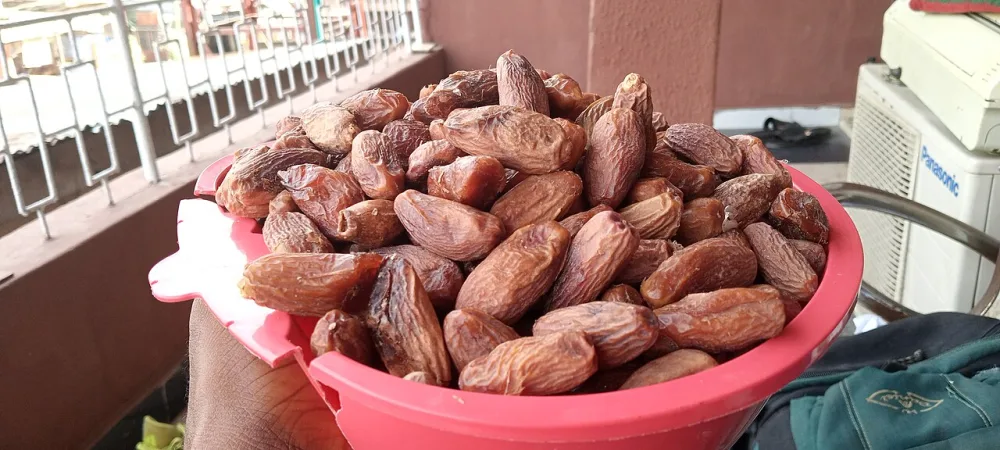
- Many hands in the open bulk sales model.
- Insects or eggs if storage is not sealed and controlled.
So SFDA and several experts recommend washing dates as a simple precaution. This applies especially to uncontrolled handling; but as a safe practice, rinsing is still advised even for packed dates. Remember, washing does not remove the dates' nutrients; it only cleans the outer surface. So there is no downside to a brief rinse, while the peace-of-mind benefit is real.
Telling Dirt From Natural Date Character
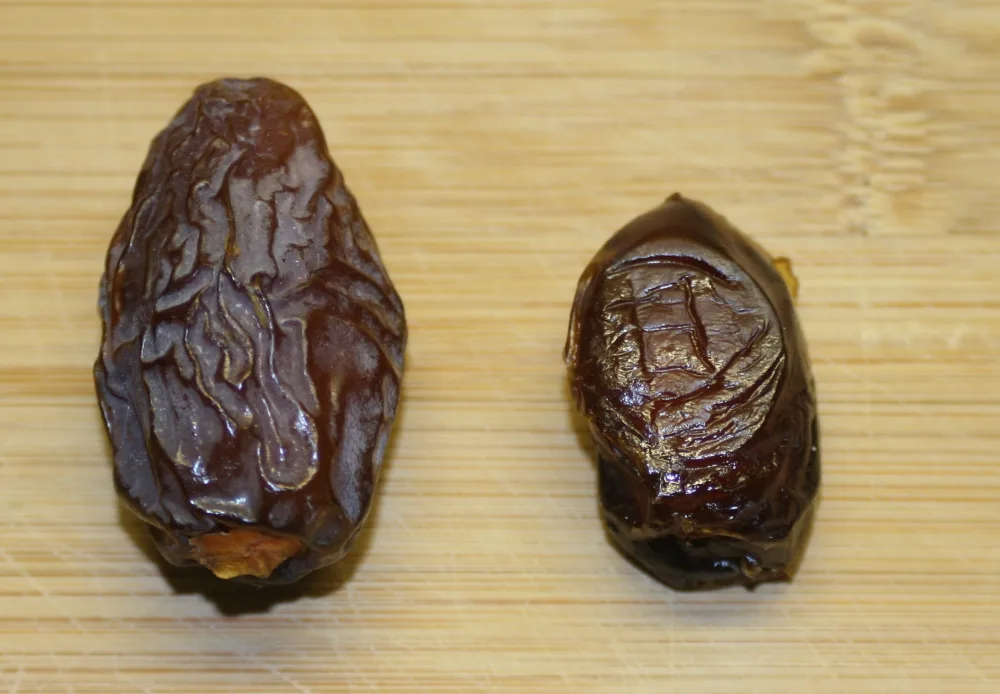
One thing to distinguish: the thin white film that sometimes appears on dried dates is not mold but natural sugar crystals that emerge as the fruit's moisture drops. These sugar crystals are dry, odorless, and safe. Mold, by contrast, is usually fuzzy, moist, and accompanied by a sour or musty smell. Knowing the difference keeps you from discarding dates that are actually still good, while staying alert to those truly spoiled.
The Right Way to Wash Dates
Based on widely circulated advice, here is safe washing practice:
- Rinse briefly under clean running water so dirt in skin folds lifts off.
- Avoid long soaking or reusing the same water repeatedly, which can redeposit loosened dirt.
- Drain and, if storing, dry the surface so excess moisture does not trigger mold.
- For immediate eating, dates can be enjoyed right after draining.
Table: Hygiene Practice by Date Type
| Type | Contamination Risk | Recommended Handling |
|---|---|---|
| Open bulk | High (dust, many hands) | Must rinse under running water before eating |
| Sealed pack | Lower | Brief rinse still recommended |
| Moist dates (rutab) | Medium, plus mold risk if warm | Rinse, drain, cold-store |
| Dried dates (tamr) | Lower, more stable | Brief rinse, store in a closed container |
Hygiene Begins at the Facility
Food safety is ideally protected upstream. In the facility, dates pass cleaning, sorting to remove defects and foreign matter, then packing in food-grade containers that limit re-contact with the environment. Sealed packs cut exposure to dust and hands, so the product reaches consumers in better condition. This is one advantage of facility-processed dates over dates sold without process.
Widely known food-safety principles—keeping clean, separating materials, and controlling temperature—also apply to date handling. A good facility keeps work areas clean, uses food-appropriate containers, and manages storage so temperature and humidity stay controlled. For consumers, choosing a source that attends to these things is the first step in food safety—long before the dates reach the home kitchen.
Safe Practice at Home
After buying, store dates in a clean, dry, closed container. For dried dates, a cool room temperature is usually enough; for moist dates, refrigerate. Wash hands before taking dates, and use a clean spoon or container when serving guests so not everyone touches the pile directly.
Storage That Protects Safety
Hygiene does not end once dates are bought; how you store them also determines their safety. Dates kept somewhere humid or warm are more prone to mold and pests. So store dates in a clean, dry, airtight container, away from direct sunlight and heat. For dried dates, a cool room temperature is usually adequate; for moist dates like rutab, the refrigerator is best. If buying in bulk, splitting into several small containers helps reduce the open-close frequency that exposes the whole stock to air.
Common Mistakes in Handling Dates
Some frequent mistakes: storing dates in an open container so they easily gather dust and pests; returning handled dates to the main container; washing the entire stock at once when only part will be eaten, leaving the rest damp; and leaving moist dates at room temperature too long. Avoiding these is as important as choosing a good source, because food safety is a chain only as strong as its weakest link.
Important Note
This guide is educational about hygiene and food safety, not medical advice. If you have a medical condition or doubt a food product's safety, consult a health professional or refer to applicable food regulation.
Closing
Keeping dates hygienic is not complicated: choose a source that handles the product well, get into the habit of rinsing before eating, and store properly at home. With these simple steps, you enjoy dates with more peace of mind during Ramadan and every day.