One of the most common questions at market stalls and online shops alike is: is it better to buy bulk dates weighed out of an open sack, or factory-packed dates sealed and labeled? The answer is not only about price. From a date-processing facility's point of view, the real difference lies in the handling chain, hygiene, and traceable quality—aspects that matter most for a food eaten straight out of the pack without cooking. Dates are a sensitive commodity: their surface is sticky, their sugar content is high, and they often change hands several times before reaching the consumer. Each handover is a chance for quality to drop or be preserved, depending on handling.
Indonesia is one of the world's largest date importers, bringing in roughly 55.43 thousand tons in 2024 worth about US$79.74 million. That volume enters through various channels—some ends up as bulk in traditional markets, some passes through more controlled re-packing. Understanding the difference between these channels helps consumers decide more consciously, not merely chase the lowest price.
What Are Bulk and Factory-Packed Dates?
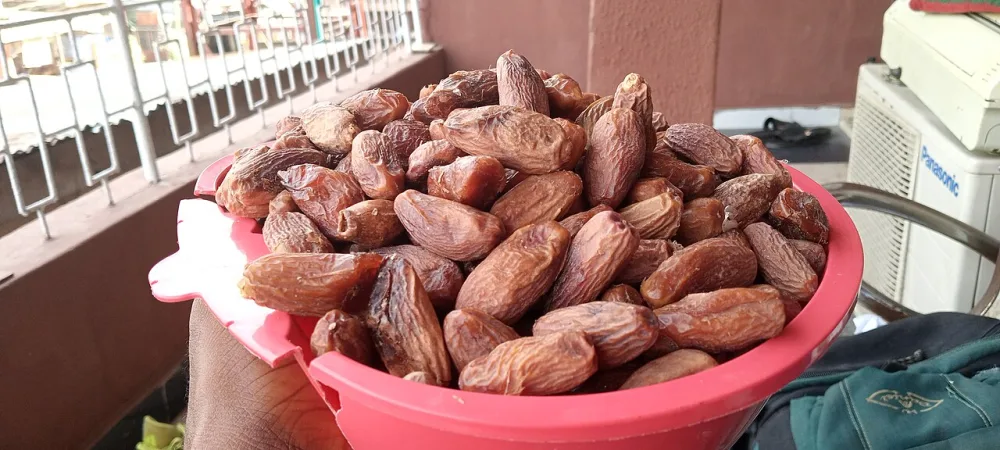
Bulk dates are sold loose, usually from 5–10 kg sacks, then weighed to order. This model is common in traditional markets. Its advantages are clear: a lower price per kilogram, the chance to inspect the fruit directly, and very flexible quantities—from a quarter kilogram to many sacks. For businesses buying to reprocess, that flexibility is valuable.
Factory-packed dates have passed through sorting, cleaning, grading, and are sealed in a closed container—vacuum packs, food-grade cartons, or barrier-film pouches. Each pack ideally carries variety, grade, net weight, and a packing date. This information makes the product traceable: if there is a quality complaint, the source can be tracked to the production batch. With bulk dates such traceability is nearly impossible, because fruit from different sources and dates often mixes in one sack.
Bulk vs Factory-Packed Comparison Table
| Aspect | Bulk Dates | Factory-Packed Dates |
|---|---|---|
| Hygiene | Exposed to dust, many hands, open air | Sealed after cleaning; minimal re-contact |
| Quality control | Depends on the seller; grades may mix | Standardized sorting and grading |
| Traceability | Hard to trace origin and date | Labeled variety, grade, weight, pack date |
| Contamination risk | Higher (dust, insects, humidity) | Lower thanks to barrier packaging |
| Shelf life | Shorter if not stored properly | Longer with vacuum/nitrogen flush |
| Price per kg | Generally cheaper | Slightly higher (processing and packaging) |
| Best for | Large volumes, industry, reprocessing | Direct eating, gifting, retail |
Hygiene: Why Packs Win for Direct Eating
Dates are harvested, sun-dried, sorted, and often packed by hand. Along that journey their sticky surface readily picks up dust. In the bulk model the fruit stays exposed to open air and is touched by many prospective buyers. Indonesian health media echo the Saudi Food and Drug Authority (SFDA) recommendation to wash dates before eating to reduce dust, dirt, and chemical residue—advice that applies especially to less-controlled handling.
Cleaned and sealed factory packs are relatively more hygienic because re-contact with the environment is limited. Barrier packaging holds back dust, water vapor, and insects, so the fruit reaches the consumer in better condition. Still, as a conservative, educational note (not medical advice), a brief rinse under running water remains a safe practice for both bulk and packed dates. The difference is the starting risk level: bulk dates begin from a more vulnerable point, so cleaning becomes more crucial.
It must be stressed that factory packaging is no absolute guarantee. A pack that is dented, leaking, or long since opened is still at risk. So when buying packed dates, check the seal's integrity, label clarity, and signs of physical damage. Good packaging only matters if the contents were handled well from the start.
Quality Control and Traceability
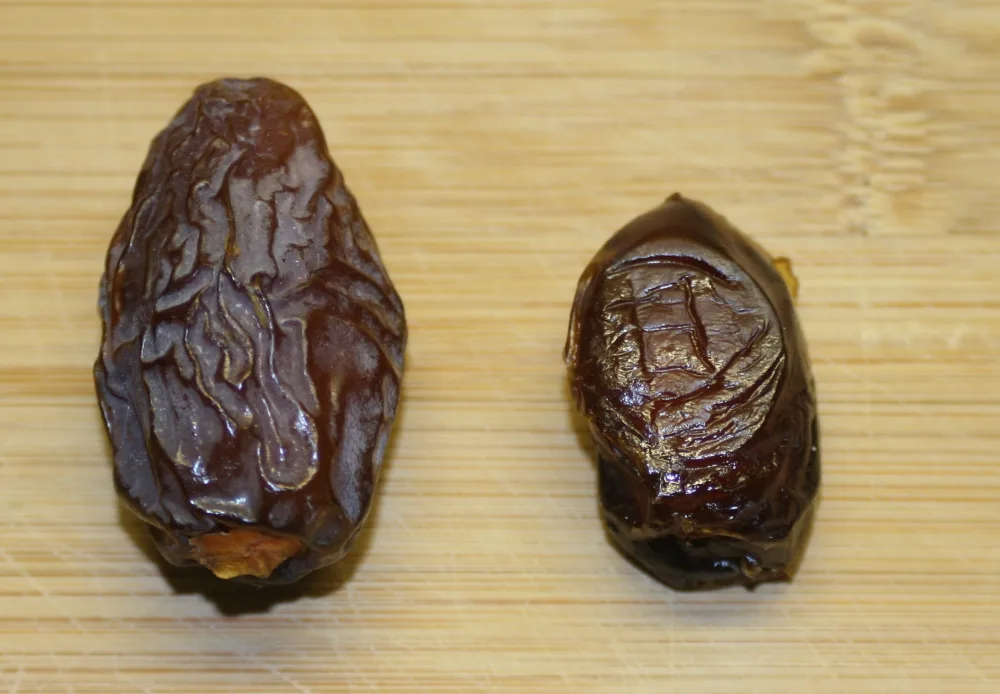
In the facility, before packing, dates pass a sorting line that removes broken, overly dry, moldy, or foreign-matter-contaminated fruit, then are graded by size and uniformity. The result is a pack with consistent contents whose variety and packing date can be traced. With bulk dates, quality depends heavily on the seller's honesty and care; premium grades are not rarely mixed with ordinary ones in a single sack, or aging fruit blends with fresh.
This consistency is the biggest added value of factory processing. When you buy a pack of a certain grade, its contents should be uniform—similar size, color, and texture. That uniformity is not just aesthetic; it is proof the sorting and grading ran with discipline. For buyers who resell or serve guests, this kind of certainty is hard to bargain away.
Price: Not Always More Expensive
It is true that bulk dates are usually cheaper per kilogram because they carry no packaging or extra processing cost. But that gap must be weighed against hygiene, consistent quality, and longer shelf life in factory packs. For resellers buying large volumes to re-pack themselves, bulk makes sense. For family consumption, hampers, or retail sales, factory packs usually pay off over time. Note too that the price gap is not always as wide as imagined; after accounting for the shrinkage of defective fruit that gets weighed in with bulk, the effective cost per kilogram of genuinely edible dates can approach the packed price.
Shelf Life: An Often-Overlooked Factor
One aspect frequently left out of the math is shelf life. Bulk dates bought in large quantities but not stored properly are prone to aging, hardening, mold, or pests—especially moist varieties like rutab. Factory packs, particularly with vacuum or nitrogen flush, are designed to extend freshness by cutting exposure to oxygen and humidity. Various sources note dried dates can last several months at room temperature up to about a year refrigerated, and good packaging helps maximize that range. For consumers who do not finish dates quickly, the shelf-life edge of packs is a real consideration.
When to Choose Bulk vs Packed
Choose bulk if you buy large volumes for food industry or catering, or will re-pack to your own hygienic standard and know how to store it properly. Choose factory packs if the goal is direct eating, gifting, hampers, or you value grade certainty and shelf life. In our range, sealed retail packs run from 250 g to 1 kg, while large-volume needs are served via bulk cartons—see our grade and packaging guide to pick the right option.
Conclusion
There is no single right answer for everyone. Bulk wins on price and volume flexibility; factory packs win on hygiene, quality control, traceability, and shelf life. For most households and gift-givers, factory packs that have been through a proper facility offer more peace of mind—while businesses with their own packing capability can extract maximum value from bulk purchases.