Many shoppers assume dates are simply picked and sold. In reality, behind a good pack of dates lies a long, standardized post-harvest chain. Understanding these steps helps you see why dates that go through facility processing are generally cleaner, more uniform, and longer-lasting. This article lays out the sequence educationally, based on horticultural post-harvest practice and packing-house operations.
Post-harvest processing fundamentally aims to preserve the quality already formed in the orchard so it does not decline on the way to consumers. All fruit keeps undergoing physiological change after picking; the facility's job is to slow that decline through moisture control, cleanliness, and storage conditions. For dates the challenge is unique because they are often eaten raw, so food safety must be protected from the earliest stage. Broadly, post-harvest literature divides the process into three groups: immediate handling after harvest (such as drying and washing), post-harvest handling (sorting, packing), and cold storage to preserve quality until consumption.
1. Harvest and Initial Handling
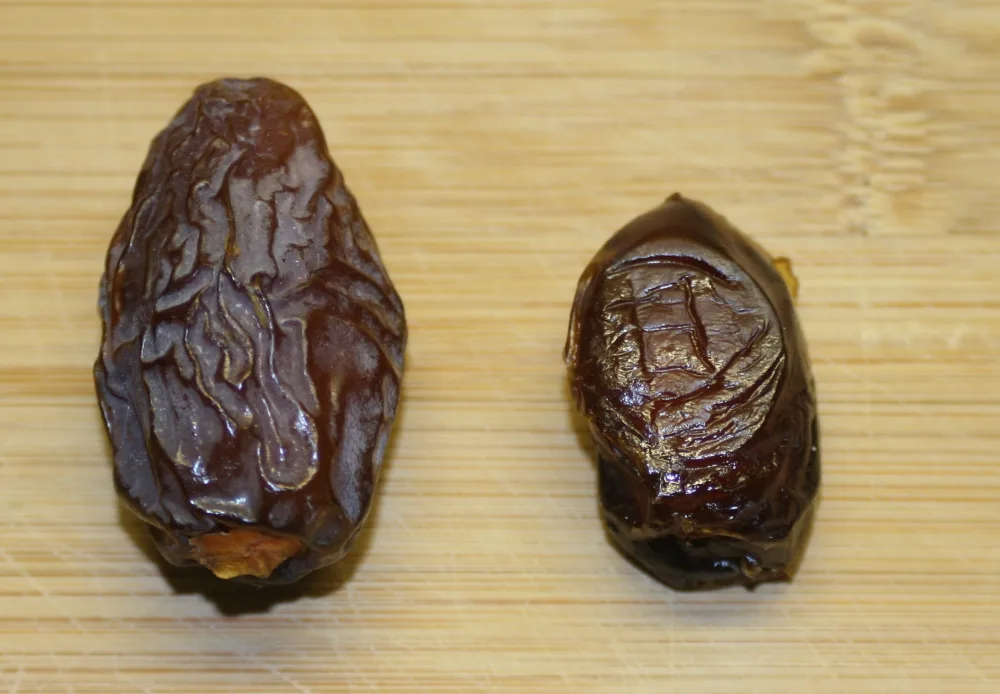
Dates are harvested at a chosen ripeness—from khalal (colored, mature) to rutab (semi-ripe, moist) to tamr (fully ripe, low moisture). Ripeness decides whether dates are sold fresh (rutab) or dried for long shelf life (tamr). After picking, bunches are moved to the facility quickly to prevent quality loss.
2. Cleaning and Washing
Freshly harvested fruit carries dust, leaf debris, and sometimes insects. Cleaning removes surface dirt. Because dates are very sticky, washing is controlled and followed by draining so surface moisture does not trigger mold. This is one reason food authorities advise rinsing dates before eating, especially less-controlled ones.
3. Drying and Moisture Control
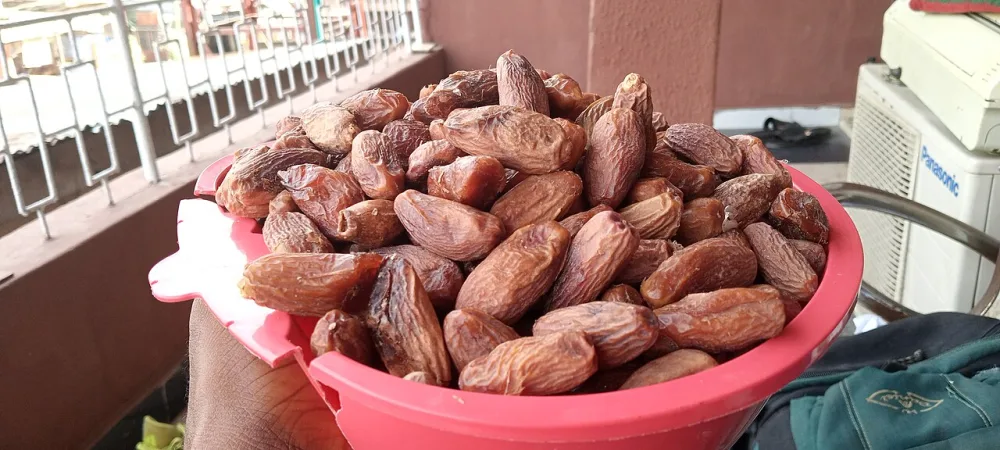
Drying is the key to shelf life. Reducing moisture suppresses mold and yeast growth. In tamr dates, moisture is brought low enough that natural sugars act as a natural preservative. Conversely, moist varieties like rutab/mazafati are deliberately kept humid and must be cold-stored. Drying can use sun or controlled drying for uniformity.
4. Sorting
Sorting separates fruit by measurable physical traits: removing broken, scorched, overly dry, or moldy fruit and foreign matter. Food-technology literature describes sorting as a critical near-final step to ensure the product meets standard. A good sorting line is the first line of food safety.
5. Grading
After sorting, dates are graded by size, uniformity, and appearance. This underlies the grade system the market knows—from Grade A to premium jumbo classes. Grading is not just marketing; it ensures a pack's contents are consistent so buyers get what is promised.
Processing Steps at a Glance
| Step | Main Purpose | Effect on Quality |
|---|---|---|
| Harvest | Pick at the right ripeness | Sets taste and type (fresh/dried) |
| Cleaning | Remove dust and dirt | Initial hygiene |
| Drying | Control moisture | Shelf life and mold prevention |
| Sorting | Remove defects and foreign matter | Food safety |
| Grading | Class by size and quality | Pack consistency |
| Packing | Protect and label | Hygiene and traceability |
| Storage | Controlled temp and humidity | Preserves freshness |
6. Packing
Packing-house operations cover draining, grading, packing, labeling, storage, and distribution. Dates are packed in food-grade containers—from barrier pouches and vacuum packs to bulk cartons. Labels ideally carry variety, grade, net weight, and packing date so the product can be traced. Packaging type is matched to purpose: small retail packs for direct eating and gifting, more protective packaging for long shelf life, and large cartons for industry and resellers. Hygiene is again kept strict here, since packing is the last moment dates are open before being sealed all the way to the consumer.
Good packaging serves double duty. First, as physical protection from impact, dust, and insects. Second, as a carrier of trust-building information: an honest, complete label lets consumers know exactly what they buy. This is what separates a processed product from anonymous, identity-less dates sold from an open sack.
7. Storage and Distribution
The final step is storage under controlled temperature and humidity so quality holds until it reaches the consumer. Dried dates are relatively stable at room temperature, while moist varieties need cold storage. A solid stock-rotation system ensures first-in stock leaves first so nothing ages in the warehouse.
Responsible Pest Control
One date-storage challenge is insects, especially moths and weevils drawn to the sugar. In post-harvest practice, pest control can use cold storage, brief freezing, or other controlled methods compliant with food regulation. A responsible approach favors physical methods—such as low temperature—and keeps warehouses clean so pest cycles do not develop. Consumers can support this by storing dates in tightly closed containers after buying.
Why These Steps Matter to Consumers
Each step adds a layer of assurance: cleaning and sorting protect food safety, drying and storage protect durability, grading and labeling protect honest quality. Dates that pass this entire chain—like our retail packs that are sorted and graded before sealing—offer certainty hard to get from dates sold without any clear process. For consumers, understanding this chain also puts price in context: the gap between processed and unprocessed dates partly reflects the cost of protecting quality at every step.
Closing
Understanding the orchard-to-pack journey makes you a smarter buyer. When judging dates, look for signs of good handling: cleanliness, size uniformity, sealed packaging, and informative labels. Those are the real fingerprints of a facility that takes quality seriously.