Terms like Grade A, AAA VIP, or VVIP Jumbo appear on date labels, yet few explain what underlies them. As a facility, we view grading not as mere commercial naming but as the outcome of systematic quality measurement. This article unpacks date quality parameters and how the grade system forms—so you can judge offers objectively rather than just trusting a label.
In the Indonesian market, the vagueness of grade terms is a gap sometimes exploited. Without a uniform standard, one seller may call a product VIP while another calls a similar product just Grade A—though physically they are nearly identical. For consumers this is confusing and potentially costly. The solution is not memorizing grade names but understanding the measurable parameters behind them. That way you can compare two offers fairly even when the grade names differ.
Sort First, Then Grade
In food technology, sorting separates by measurable physical traits, while grading classifies quality against a standard. The order: dates are sorted first to remove defective fruit and foreign matter, then classed into grades. Without strict sorting, even the top grade can be contaminated with poor fruit. So grade quality depends heavily on sorting-line discipline.
Key Quality Parameters
Parameters commonly assessed when grading dates:
- Size and weight per fruit. Bigger and heavier generally means higher grade. Size is often stated as count per kilogram—fewer per kg means larger fruit.
- Uniformity. A high-grade pack should hold fruit relatively uniform in size and color.
- Moisture and texture. Texture true to the variety (soft, chewy, or dry) without excessive hardening.
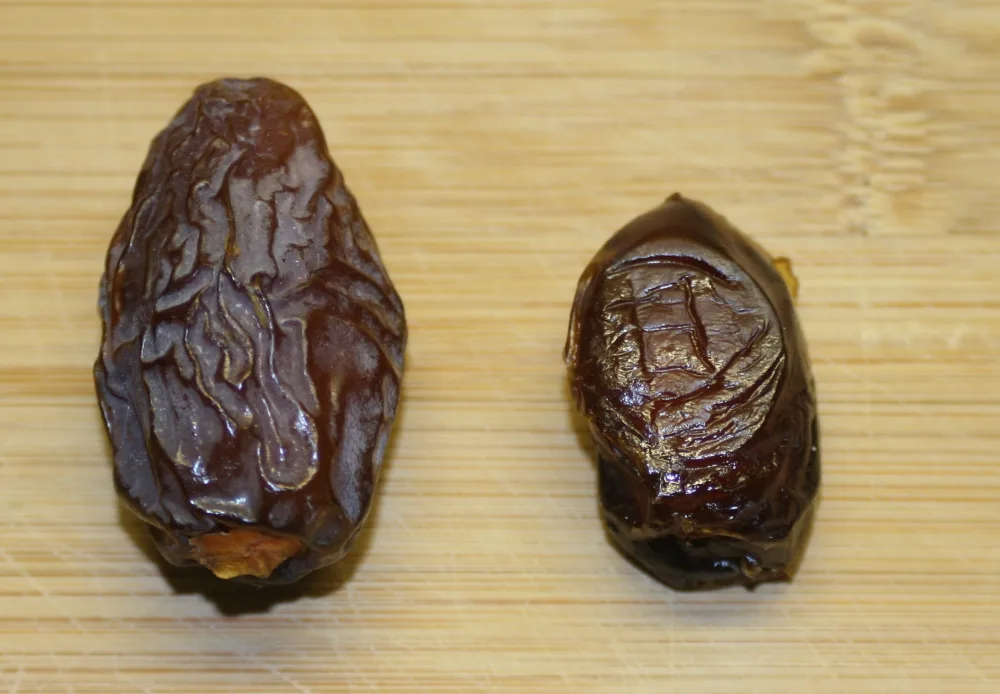
- Defects. Minimal broken, scorched, overly wrinkled, blemished, or moldy fruit.
- Cleanliness. Free of foreign matter, dust, and dirt.
- Wholeness. For some varieties, whole pitted dates rate higher than crushed ones.
Illustrative Grade Tiers
| Grade (Illustrative) | Size/Uniformity | Defect Level | Market Position |
|---|---|---|---|
| Grade A | Standard, fairly uniform | Few | Daily consumption |
| AA Super | Larger and more uniform | Very few | Mid-tier |
| AAA / VIP | Large, highly uniform | Minimal | Premium |
| VVIP Jumbo | Very large, most uniform | Near zero | Top premium and gifting |
Important: grade naming is not universally standardized across producers. Terms like VIP or Jumbo can mean different things between brands. So measurable parameters—especially count per kg—are a more objective reference than the grade name alone. The table above is illustrative to show a general pattern, not an official universal standard.
Uniformity: A Marker of Process Discipline
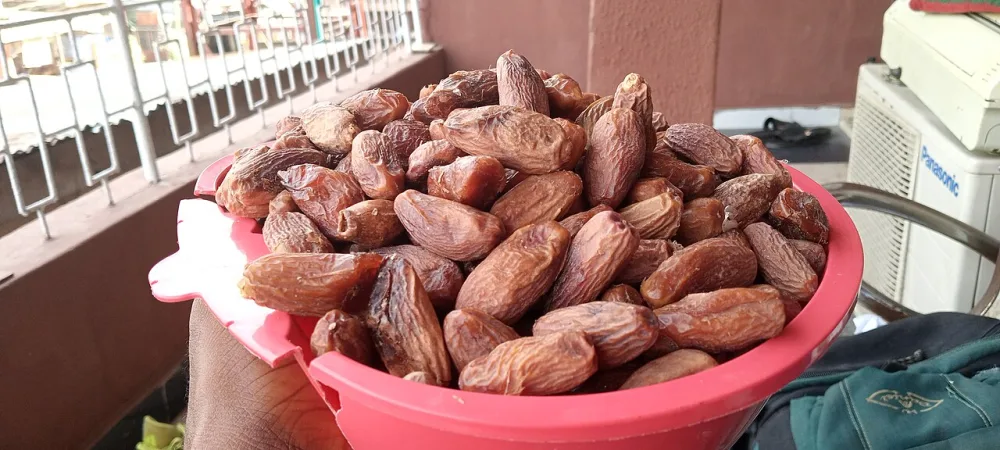
Among all parameters, uniformity is often the most honest marker of how serious a grading process is. A good high-grade pack holds fruit of relatively the same size, color, and ripeness. By contrast, a pack with widely varying sizes—large and small mixed—signals loose grading, however high the stated grade. When you open a pack, a tidy size spread is real evidence the sorting and grading lines worked carefully.
Why Count Per Kg Matters
Count per kilogram is the most honest way to judge size. For example, dates at 90–110 pieces per kg are clearly larger than those at 150 per kg. When comparing two offers with the same grade name, ask for count per kg to compare apples to apples. This is the practice we apply on the grading line so buyers get certainty.
Quality Is Not Only Size
Large dates are not necessarily the tastiest; flavor and texture depend strongly on variety and ripeness. A smaller Sukari can taste sweeter and softer than a larger variety. So grade is ideally read alongside variety: grade judges physical quality within a variety, not flavor across varieties.
How Grade Relates to Price
Grade and price generally move together within a variety: larger, more uniform, and less defective means higher price. But the price jump between grades does not always match the jump in taste. For daily eating, a mid-tier grade often offers the best value because it already tastes excellent at a far more affordable price than the top grade. Premium and jumbo grades are more relevant for gifting, hampers, or special serving, where appearance and uniformity add value. Understanding this helps you allocate budget smartly by purchase purpose.
How Consumers Use This
When buying, do not fixate on the grade name. Ask for concrete parameters: variety, approximate count per kg, uniformity, and whether defective fruit is sorted out. Sellers serious about quality will gladly explain. If a seller dodges or cannot answer these basics, that itself is a signal worth noting. To help, our grade and packaging guide explains these tiers per variety so you can choose by need—daily, premium, or gifting.
Common Misconceptions About Grade
Several misconceptions circulate. First, the belief that the top grade is always worth its price for everyone—yet for daily eating, a mid-tier grade is often wiser. Second, the belief that grade names mean the same across all brands—yet, as explained, naming is not universally standardized. Third, the belief that big dates must be more nutritious—yet nutritional value depends more on variety and ripeness than size alone. Fourth, the belief that completely flawless dates must be natural—yet an overly perfect, glossy look sometimes signals added treatment. Recognizing these makes your judgment more mature.
Why Grading Transparency Matters
For a facility, grading transparency is a form of responsibility. When a product is labeled a certain grade, its contents must genuinely reflect that claim. Inconsistency between label and contents not only harms consumers but erodes trust in the whole product category. So our practice is to explain measurable parameters openly—including approximate count per kilogram and variety character—so buyers can verify for themselves that price, grade, and received quality match.
Closing
A good grading system reflects process discipline: strict sorting, consistent measurement, and honest labeling. By understanding the parameters behind it, you move from merely trusting a label to judging quality objectively.